SIZZLE SEITAILOW BACK PAIN CARE · TOKYO

OJI, TOKYO · 2 MINUTES FROM THE STATION

Back pain that hasn’t improved, no matter where you’ve gone.

The reason may be that treatment was focused on the wrong area.

Before treatment, we carefully check which movements bring on your pain and how your body responds, so we can identify where treatment should be focused.

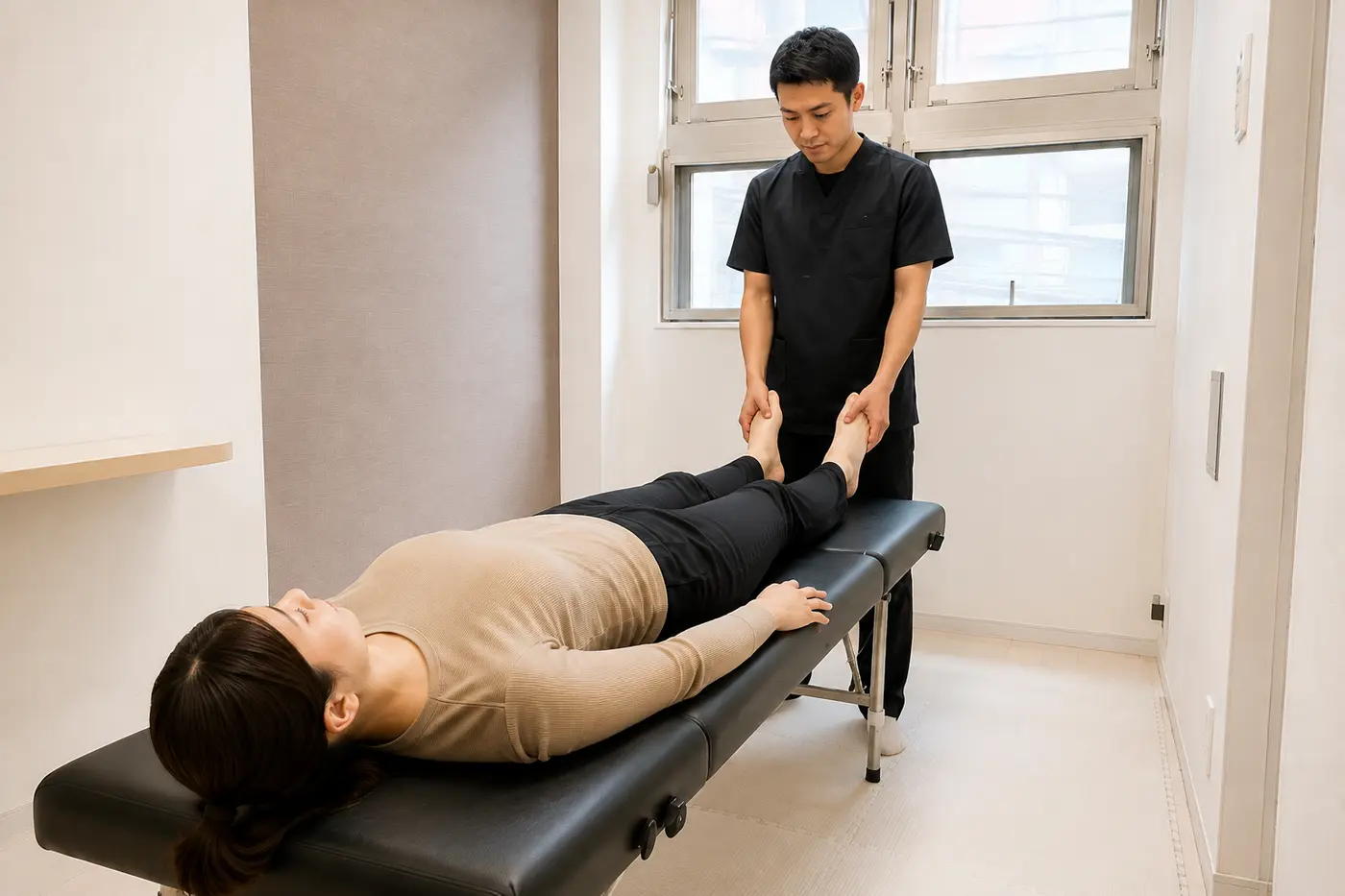
Then we use our own gentle hands-on technique, without forceful pressure or forced stretching. Our goal is to reduce the pain you have now and help you move more easily again.

Visiting Tokyo? A single appointment during your trip is welcome. You can contact us before you travel or while you are here.

WhatsApp is the quickest way to contact us. Your appointment is confirmed by our reply.

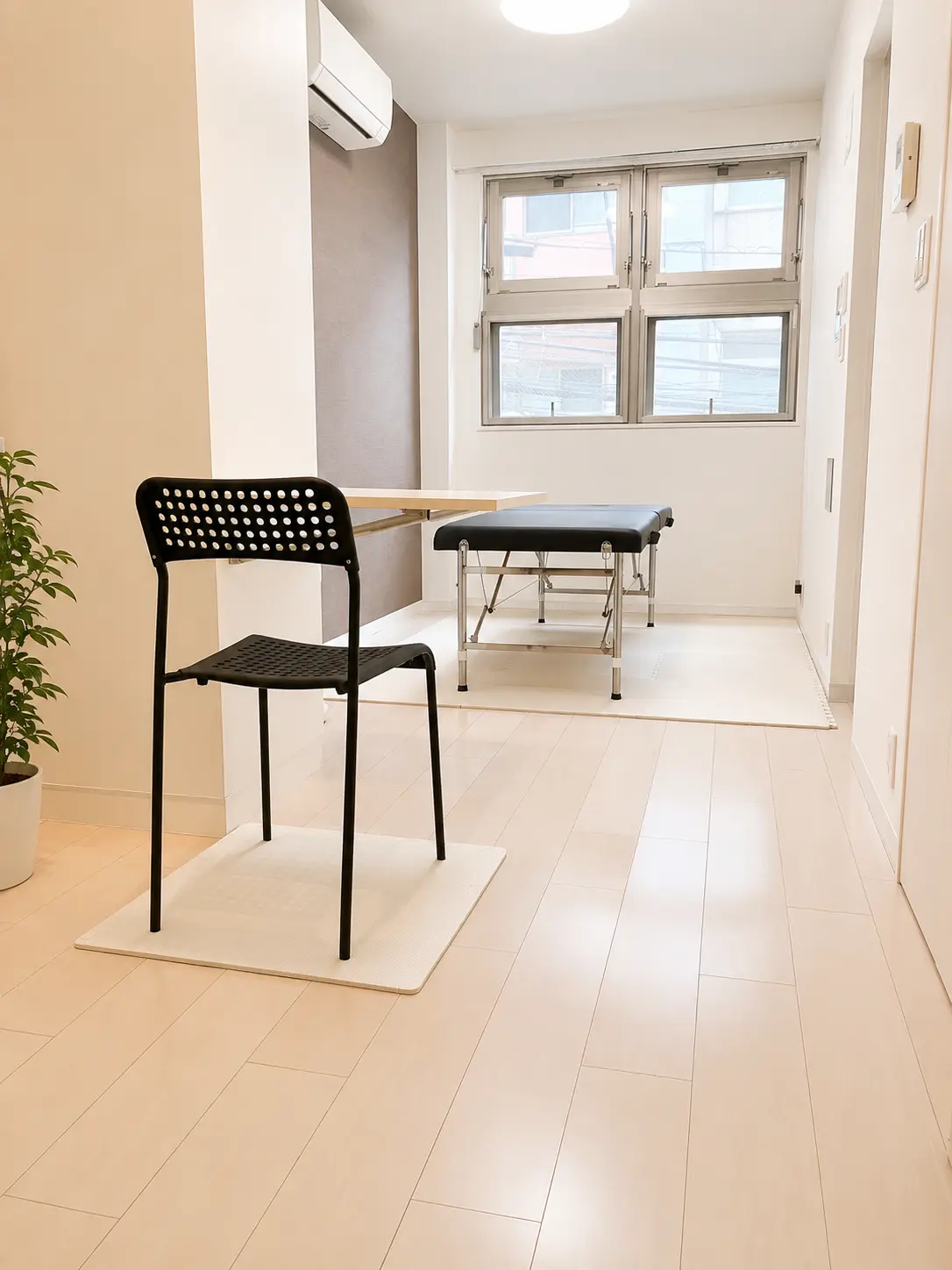
A quiet treatment room at Sizzle Seitai
A quiet space in Oji, Tokyo.

15years of hands-on experience

2 minon foot from Oji Station

One visitwelcome during your trip

WHY IT MAY NOT HAVE IMPROVED

The place that hurts is not always the place that needs treatment.

We have seen many people whose low back pain did not improve even after receiving treatment elsewhere.

When we assess them, we often find that muscles away from the painful lower back are involved.

No matter how carefully treatment is performed, treating an area that is not related to the pain will not lead to improvement. That is why, before treatment begins, we first work out where treatment should be focused.

Find where to treat. Treat. Check again.

  1. Reproduce the movement that hurts

    We listen to your history, then check the actual movements that bring on your pain, such as bending forward or backward.

  2. Narrow down the areas involved

    Based on anatomy and the movement that hurts, we select possible muscles. We then hold or press a candidate area while you repeat the same movement. If the pain changes, that response helps us narrow down where to treat.

  3. Treat the area we identified

    We mainly use our own gentle hands-on technique, without forceful pressure or forced stretching. If pressure is needed, we explain it beforehand, including any possible discomfort, and ask for your agreement.

  4. Repeat the same movement

    After treatment, you repeat the same movement so we can check how much the pain and movement have changed. If pain remains, we reassess, narrow the area down further and treat again within the available time.

Illustrative image of gentle hands-on treatment
Illustrative treatment image.

FROM OUR EXISTING CASE RECORDS

What hurt. What we checked. What changed.

These are summaries of cases published on our Japanese website. They show the painful movement, what we checked, where we treated and what changed afterwards.

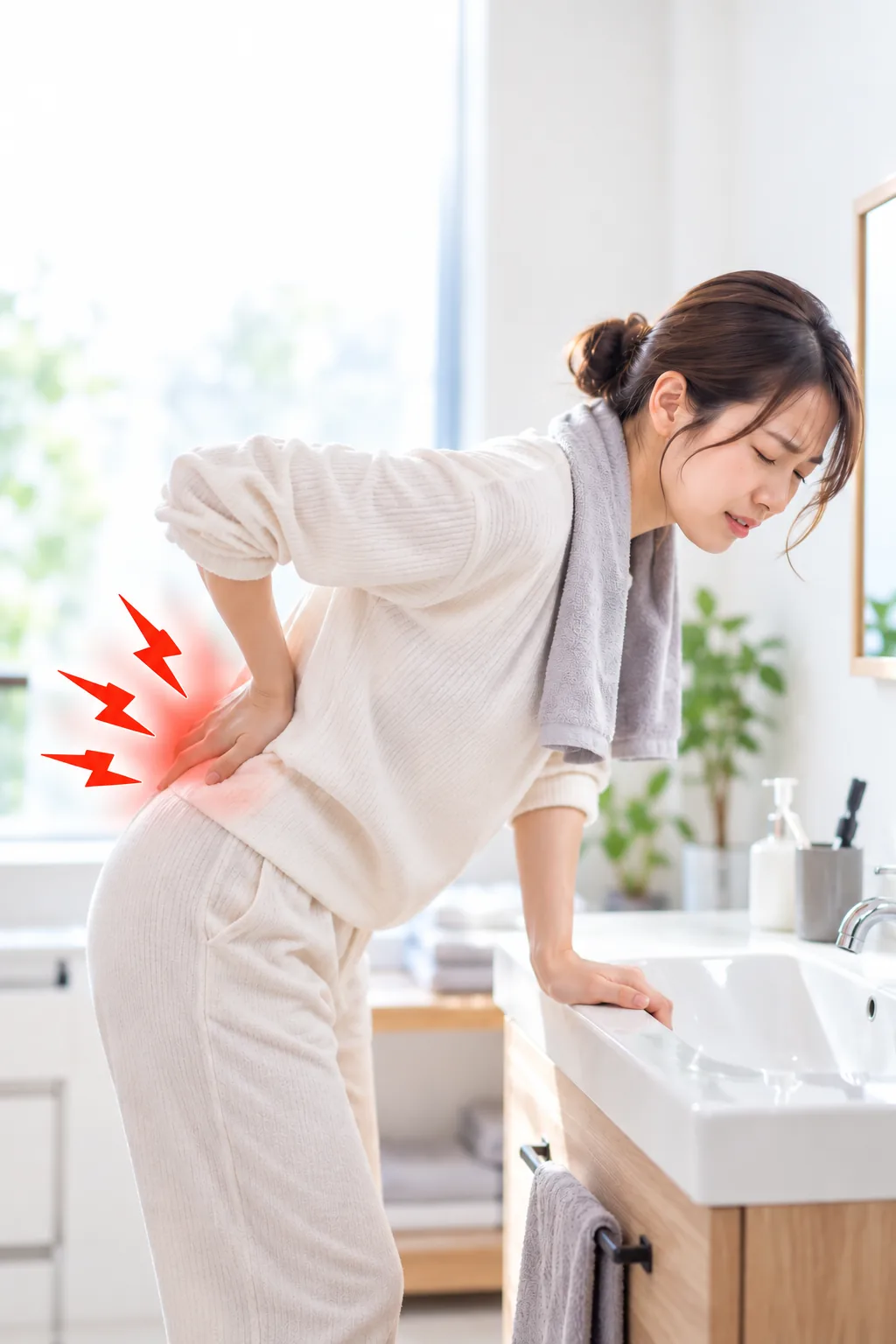
Illustration: Leaning forward to wash the face
Symptom illustration; not a photograph of the actual client.

Leaning forward to wash the face

The difficulty

Even a slight forward bend caused low back pain when washing the face, doing the dishes or washing the hair.

What we checked

The pain changed when the person bent forward while we held the inner-thigh muscle (adductor magnus) and the calf muscles. We used this response to guide treatment of those areas.

What happened afterwards

Immediately after treatment, bending forward and the face-washing movement no longer caused pain. The person continued attending for a while with the aim of preventing the pain from returning, and later reported being able to wash dishes and hair without worrying about bending forward.

Read the original case (Japanese) →
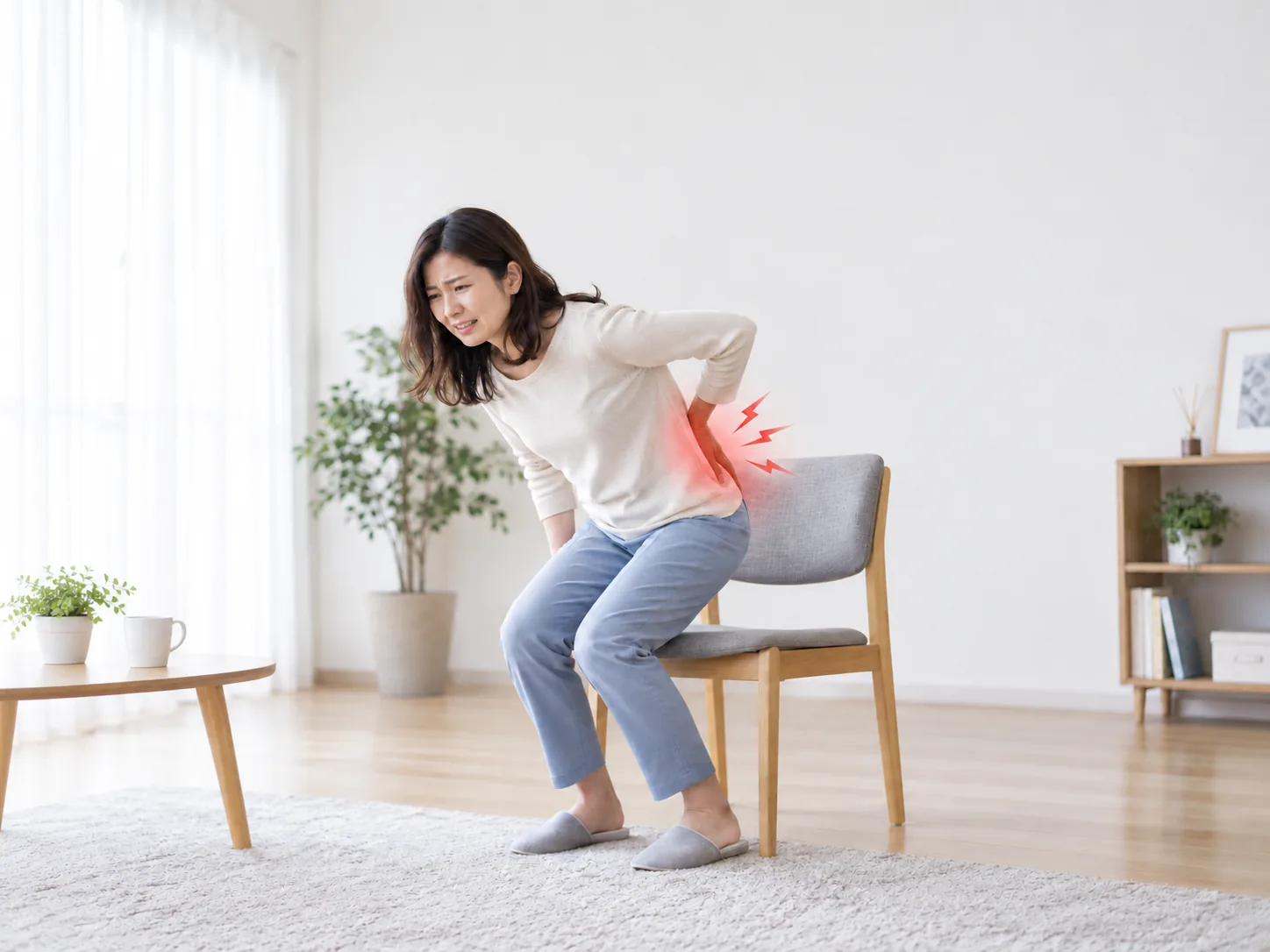
Illustration: Standing up from a chair
Symptom illustration; not a photograph of the actual client.

Standing up from a chair

The difficulty

After sitting, standing up caused low back pain and made it difficult to straighten the body for a while. Even a short sit on a station bench could bring it on.

What we checked

Both bending forward and returning upright were painful. Repeating these movements while we held particular muscles changed the pain, guiding us to the inner-thigh muscle (adductor magnus) and the deep hip-flexor muscles (iliopsoas). We treated those areas.

What happened afterwards

At the check immediately after treatment, both bending forward and returning upright were pain-free. The published record does not describe longer-term follow-up.

Read the original case (Japanese) →

These are individual outcomes. Results and the number of visits needed vary; improvement or complete relief in one visit cannot be guaranteed.

YOUR PRACTITIONER

Sugawara

15 years of hands-on experience

My strength is finding the area that is actually related to your low back pain. I do not decide where to treat simply because that is where it hurts. I use anatomy, the movement that causes pain and your response during the assessment to narrow it down.

Finding the right area is the first step. I then use my own gentle technique, working with the body’s responses rather than relying on strong pressure or forced stretching.

If you have tried different treatments without relief, I would like to look again at where treatment should be focused and see how much we can change the pain and movement during your visit.

Read the full profile (Japanese) →

A VISIT DURING YOUR TRIP

One visit during your stay is welcome.

For travelers visiting Japan, we can reserve a 60-minute appointment for your consultation, movement checks, treatment, reassessment and explanation. This is the total appointment time, not 60 minutes of hands-on treatment.

There is no pressure to book another visit or buy a course of sessions.

Why is the traveler rate different?

Our regular domestic appointment is 30 minutes for ¥3,300 and is designed for people who live in Japan and can return if another visit is needed. Travelers visiting Japan may only have one opportunity to come, so we reserve a longer 60-minute appointment and aim to complete the consultation, movement checks, treatment, reassessment and explanation within that visit. This pricing structure allows us to keep offering a dedicated one-visit option for travelers.

The price is based on your type of visit, not your nationality. If you live in Japan, our regular domestic price of ¥3,300 for 30 minutes applies regardless of nationality.

A dedicated approach for visitors to Japan.

This 60-minute traveler appointment is not simply a longer version of our regular visit. It gives us time to use the assessment process and gentle treatment methods I have developed through 15 years of hands-on work: reproduce the movement that hurts, narrow down the areas that may be contributing, treat them, and then repeat the same movement to reassess the change.

For visitors to Japan, this is combined with smartphone translation, extra time for explanation, and a one-visit format designed for people who may not be able to return during their stay. This traveler format is prepared specifically for people visiting Japan.

We use smartphone translation.

We use smartphone translation for questions and explanations. We also check the movements that cause pain and any changes you feel during the session, so you do not need to explain everything in perfect English.

Photos, videos and social media posts are very welcome.

Feel free to take photos or record video during your visit. You are also very welcome to share your experience on Instagram, TikTok, YouTube or other social media. If you would like to film part of the assessment or treatment, just let me know and I will make it easy to record.
FIND US

Two minutes from Oji Station.

2F, 1-2-9 Kishimachi, Kita-ku, Tokyo 114-0021, Japan
東京都北区岸町1-2-9 2階

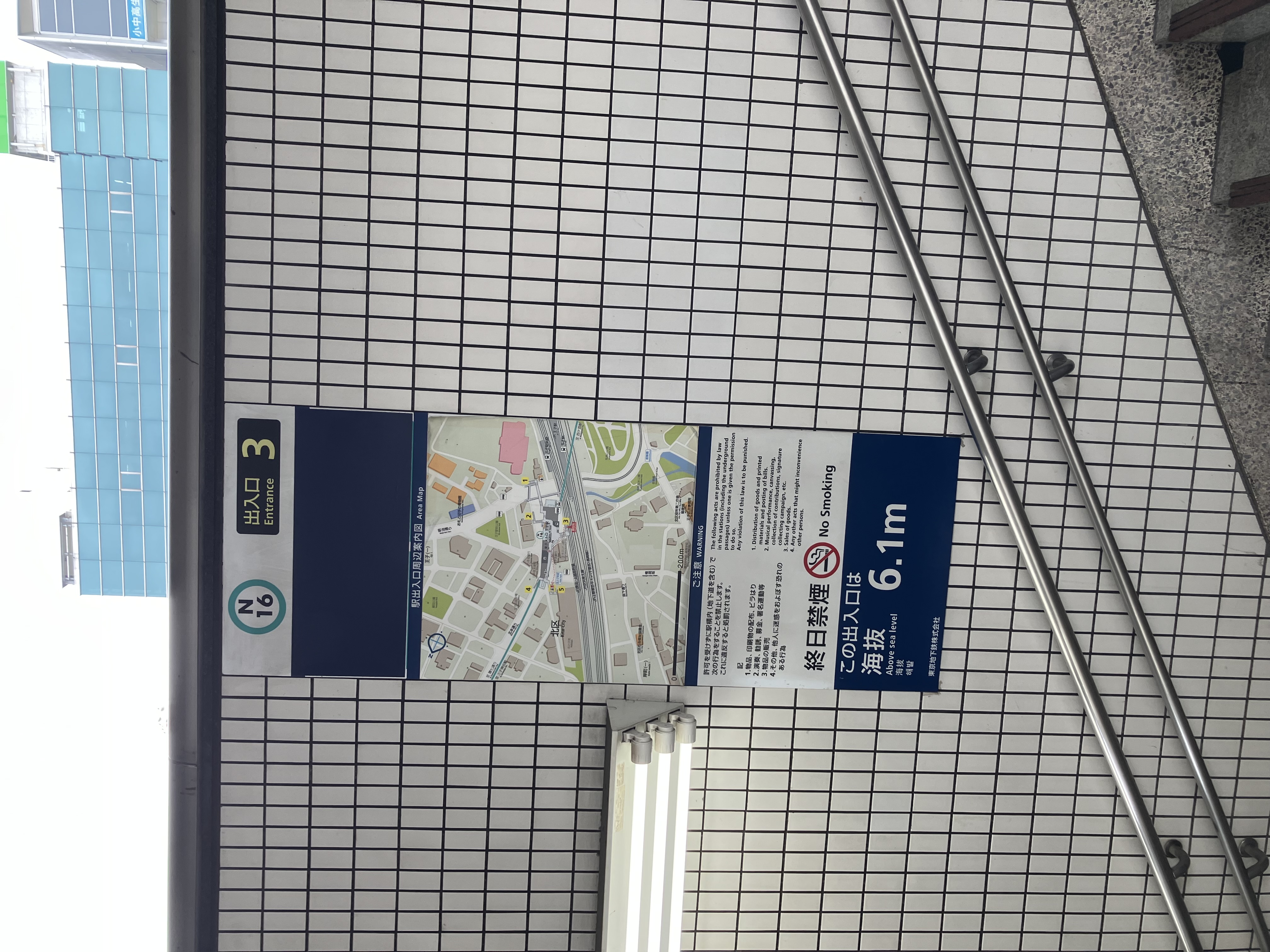
JR Keihin-Tohoku Line: Oji Station, North Exit. Tokyo Metro Namboku Line: Oji Station, Exit 3.

Open daily, 10:00–20:00 (Japan time). By appointment only.

We are on the second floor, reached by stairs.

Please check the entrance photos.

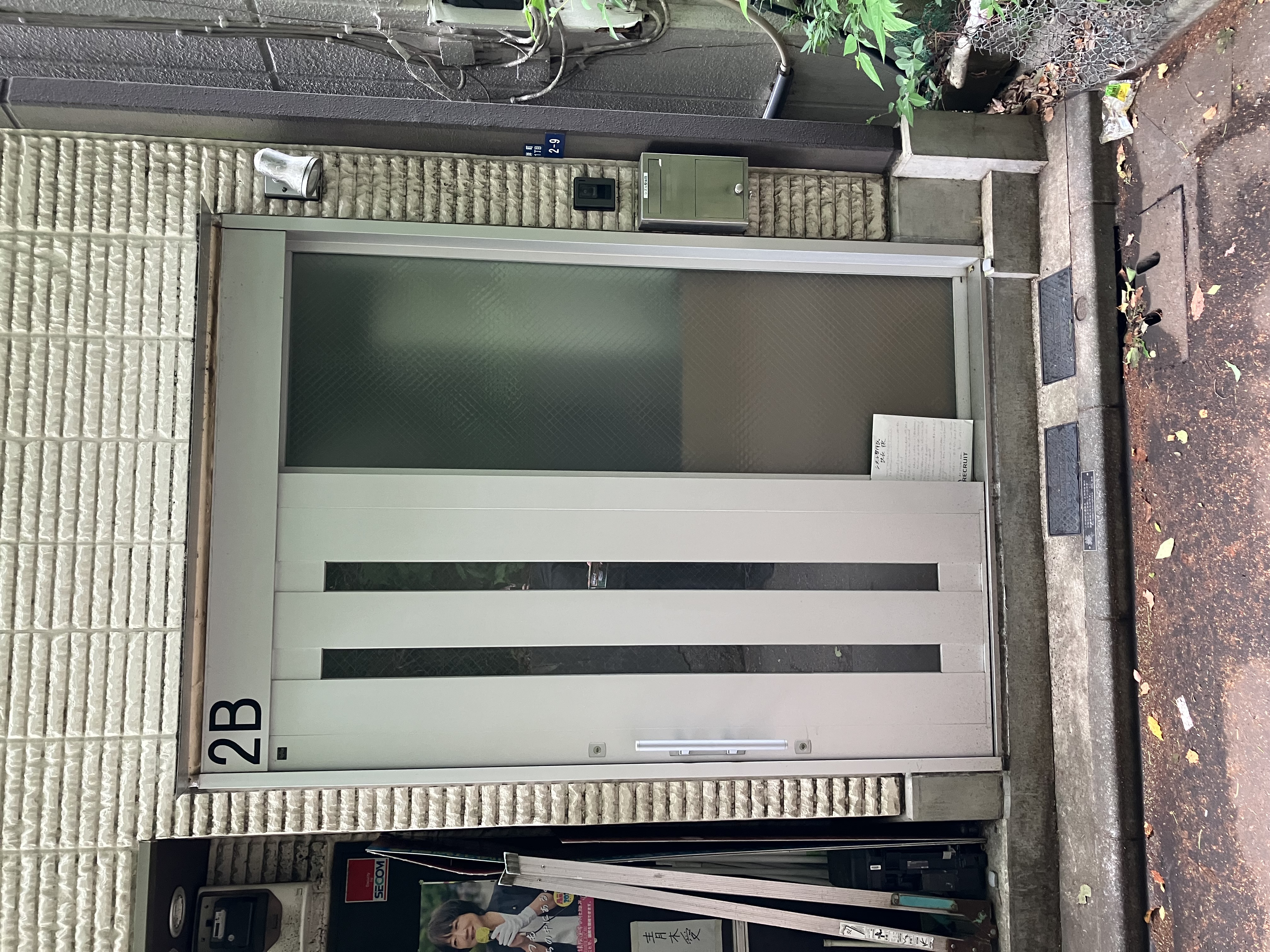
The Google Maps pin may point to the neighboring building. Our entrance is at the back, marked “2B”. Follow the photo directions below rather than relying on the pin alone.

Open Google Maps ↗

Phone: +81 70-6441-3907
English support is not available by phone. If you need help in English or get lost, please message us on WhatsApp.

Message us on WhatsApp ↗
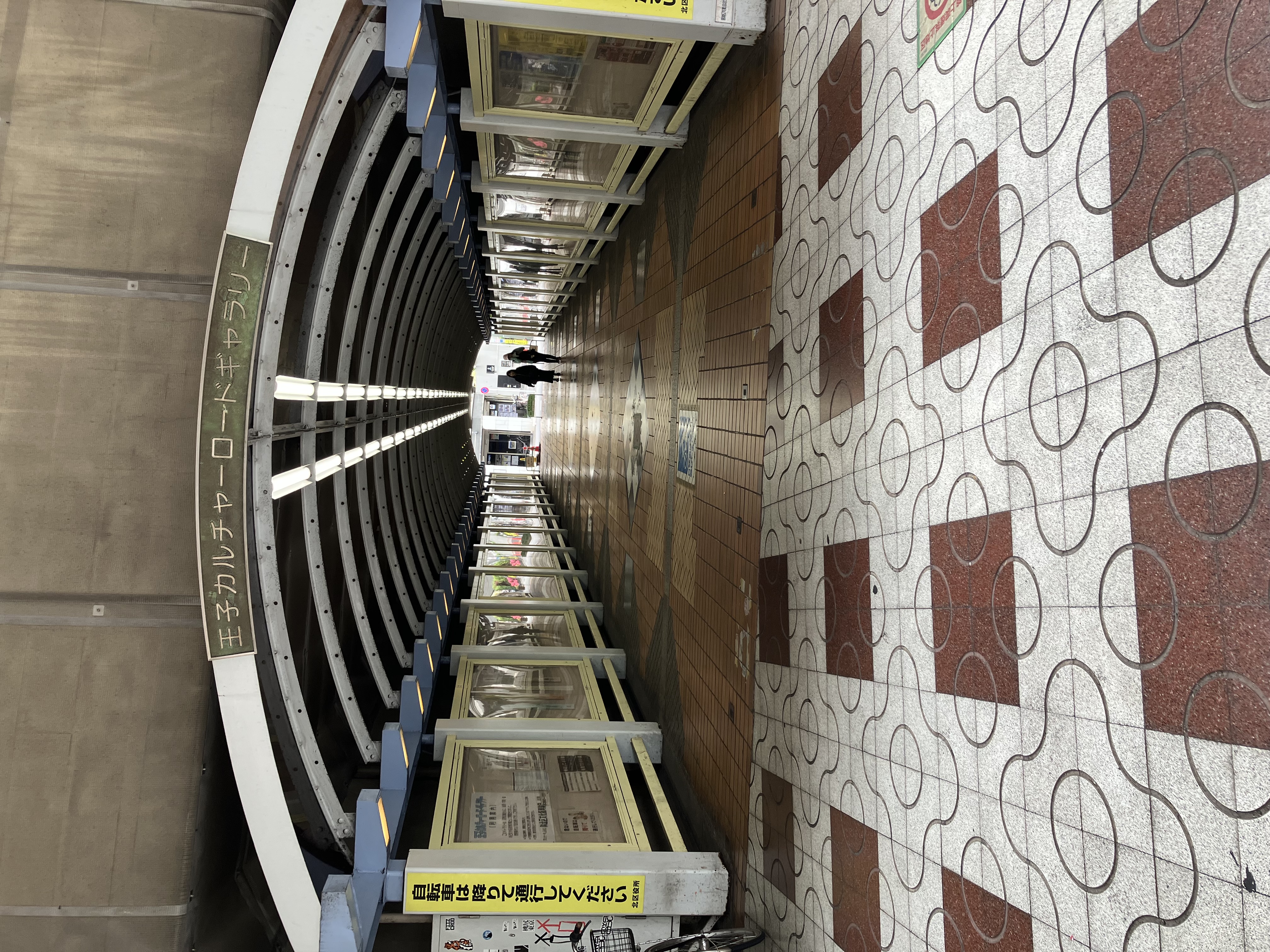
Photo directions from Tokyo Metro Exit 3

The existing route photos start at Tokyo Metro Namboku Line Exit 3. Tap any photo to enlarge it.

  1. Route photo 1: Start at Exit 3 of Oji Station on the Tokyo Metro Namboku Line.

    Start at Exit 3 of Oji Station on the Tokyo Metro Namboku Line.

  2. Route photo 2: After leaving the exit, find Oji Culture Road Gallery on your right. Walk straight through it.

    After leaving the exit, find Oji Culture Road Gallery on your right. Walk straight through it.

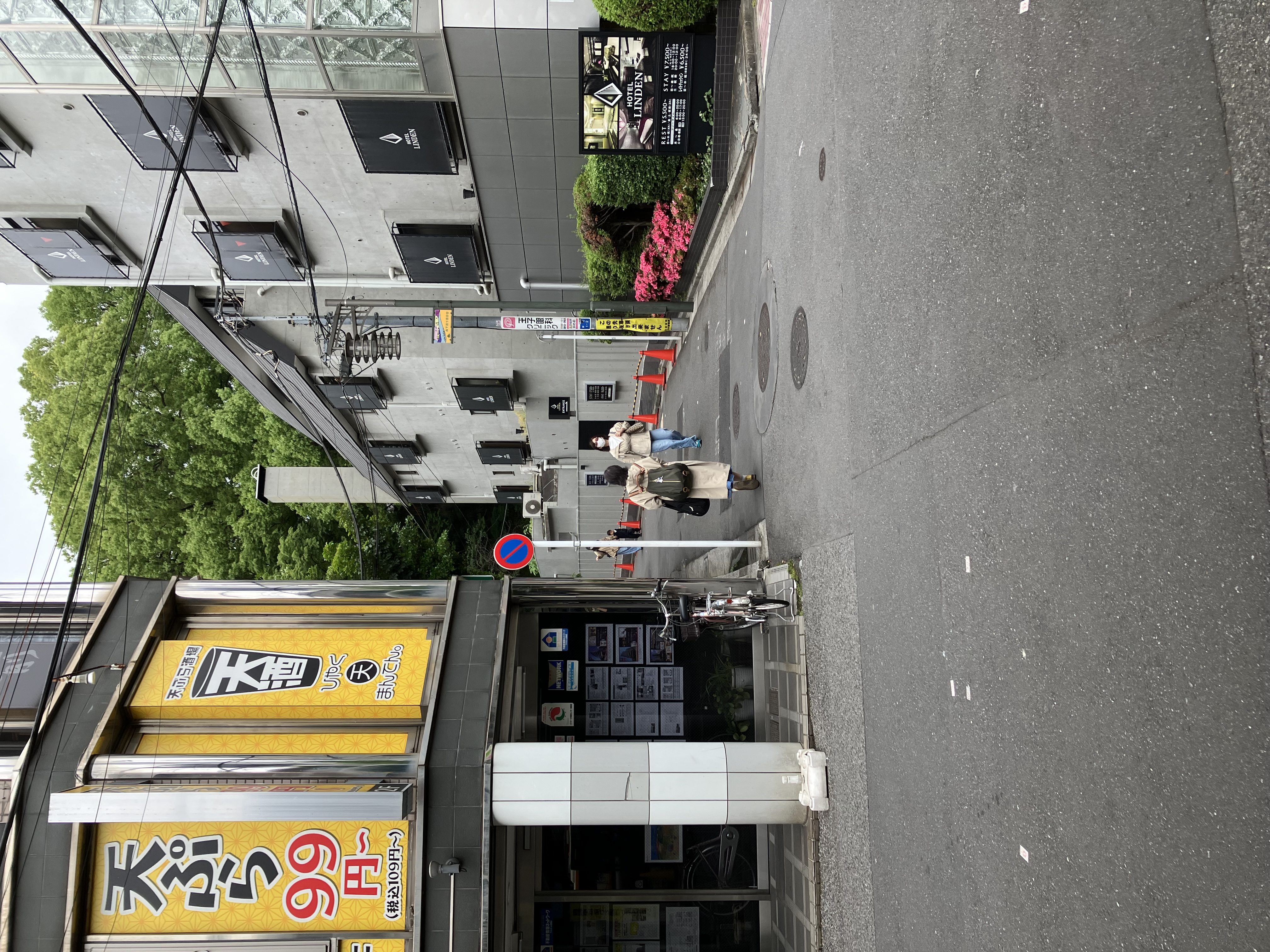
  3. Route photo 3: Continue with the tempura restaurant on your left and Hotel Linden on your right.

    Continue with the tempura restaurant on your left and Hotel Linden on your right.

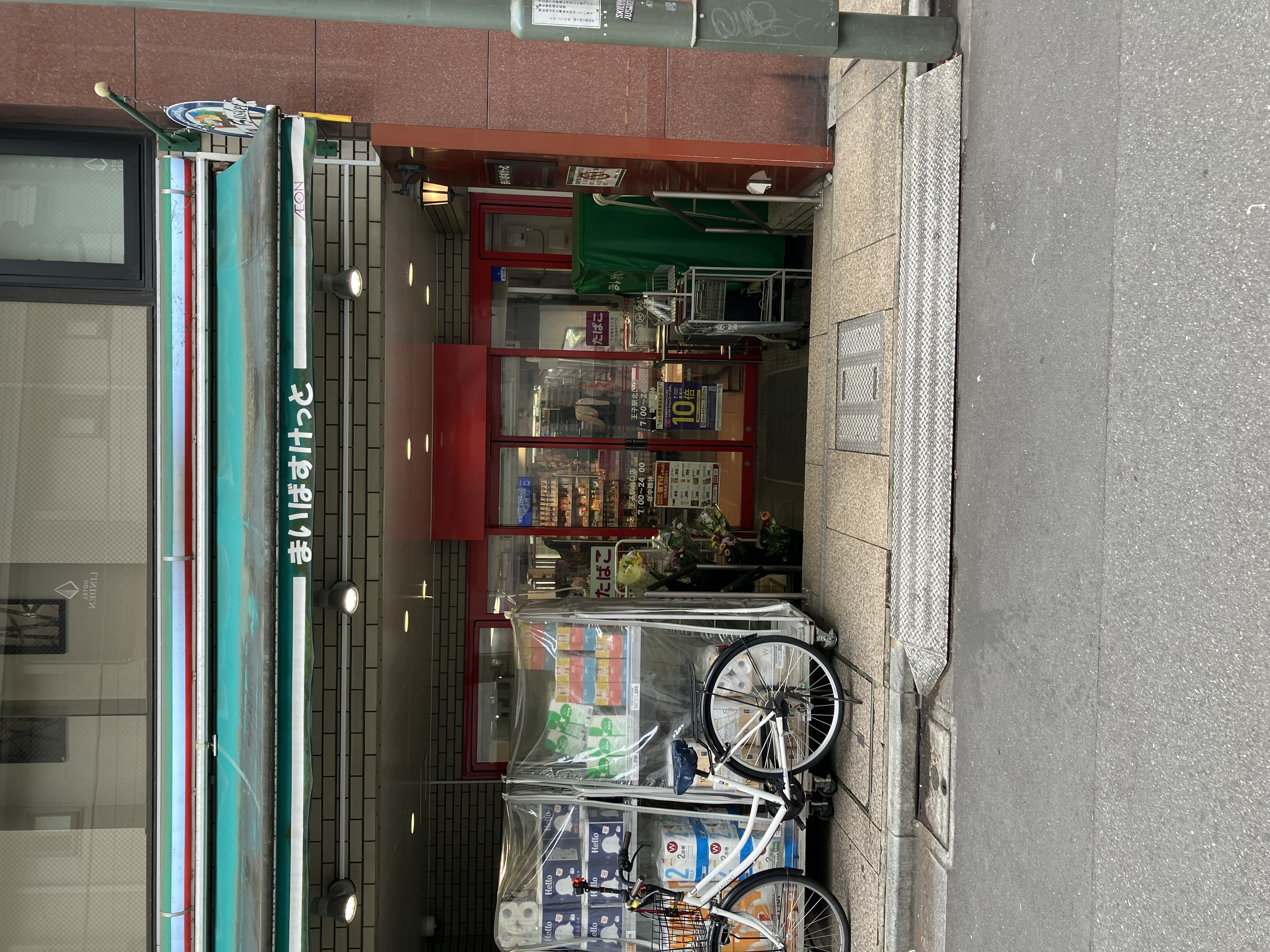
  4. Route photo 4: A little further along, you will see My Basket supermarket on your left.

    A little further along, you will see My Basket supermarket on your left.

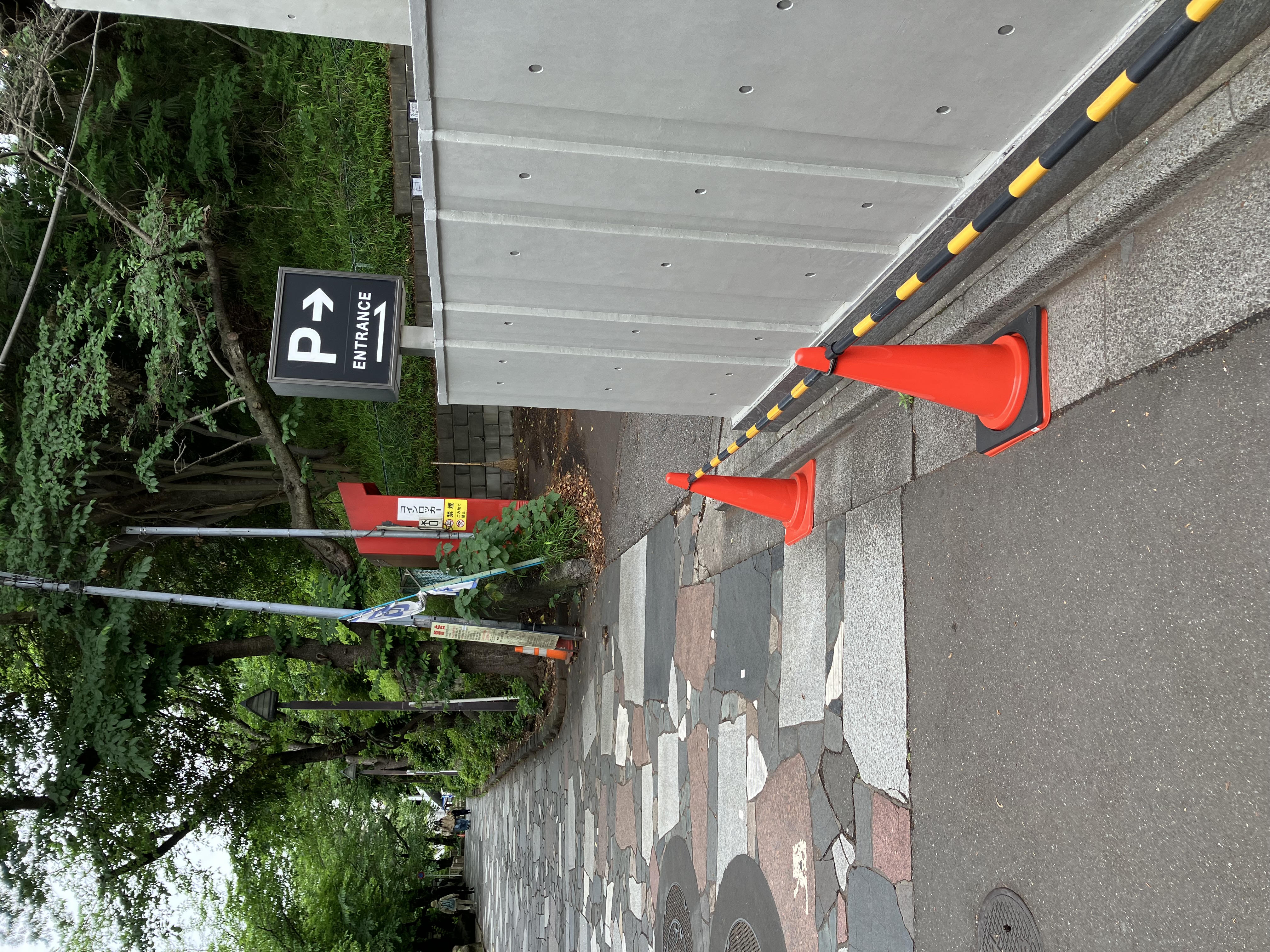
  5. Route photo 5: Turn right at Hotel Linden’s “PARKING ENTRANCE” sign.

    Turn right at Hotel Linden’s “PARKING ENTRANCE” sign.

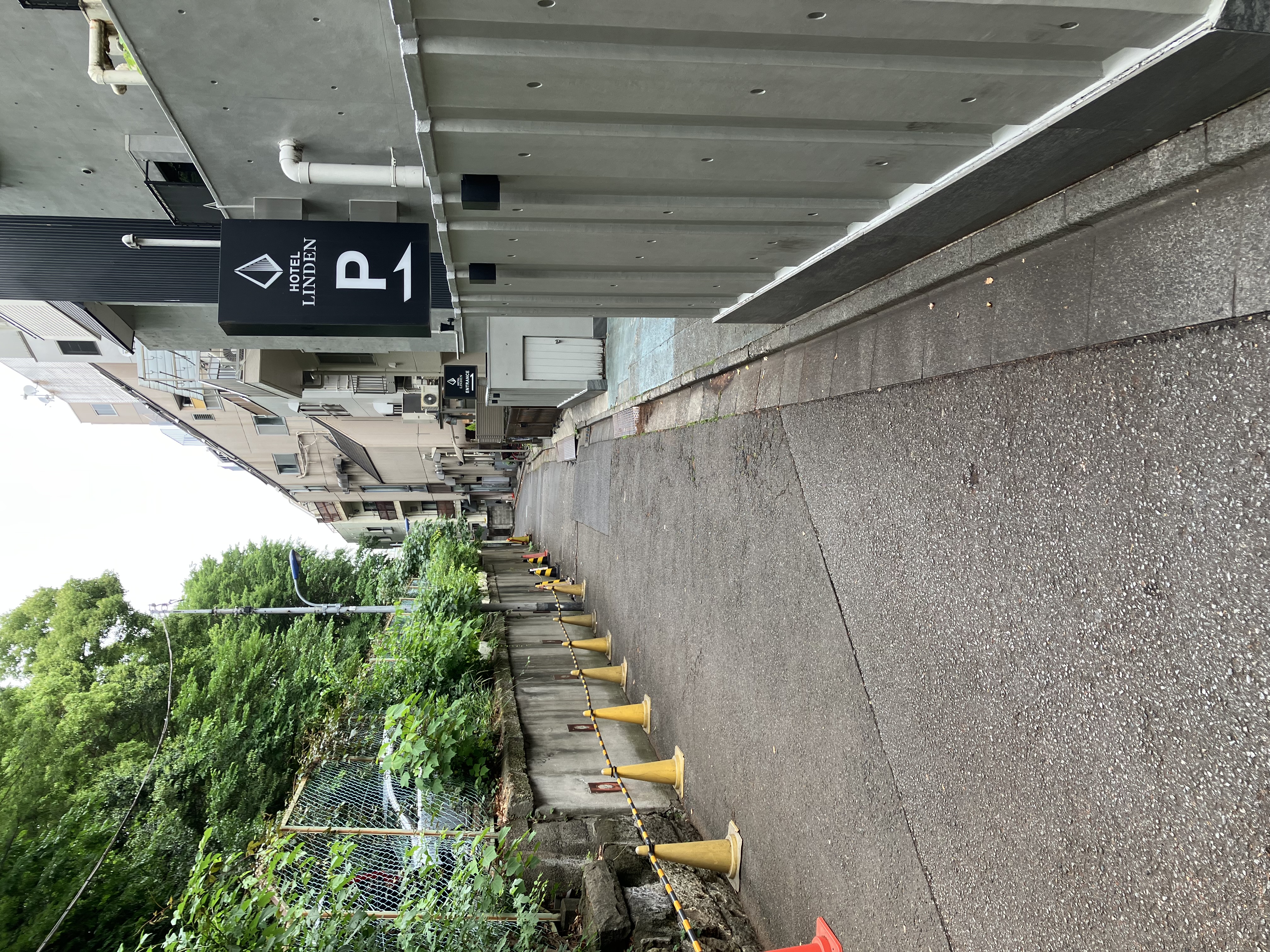
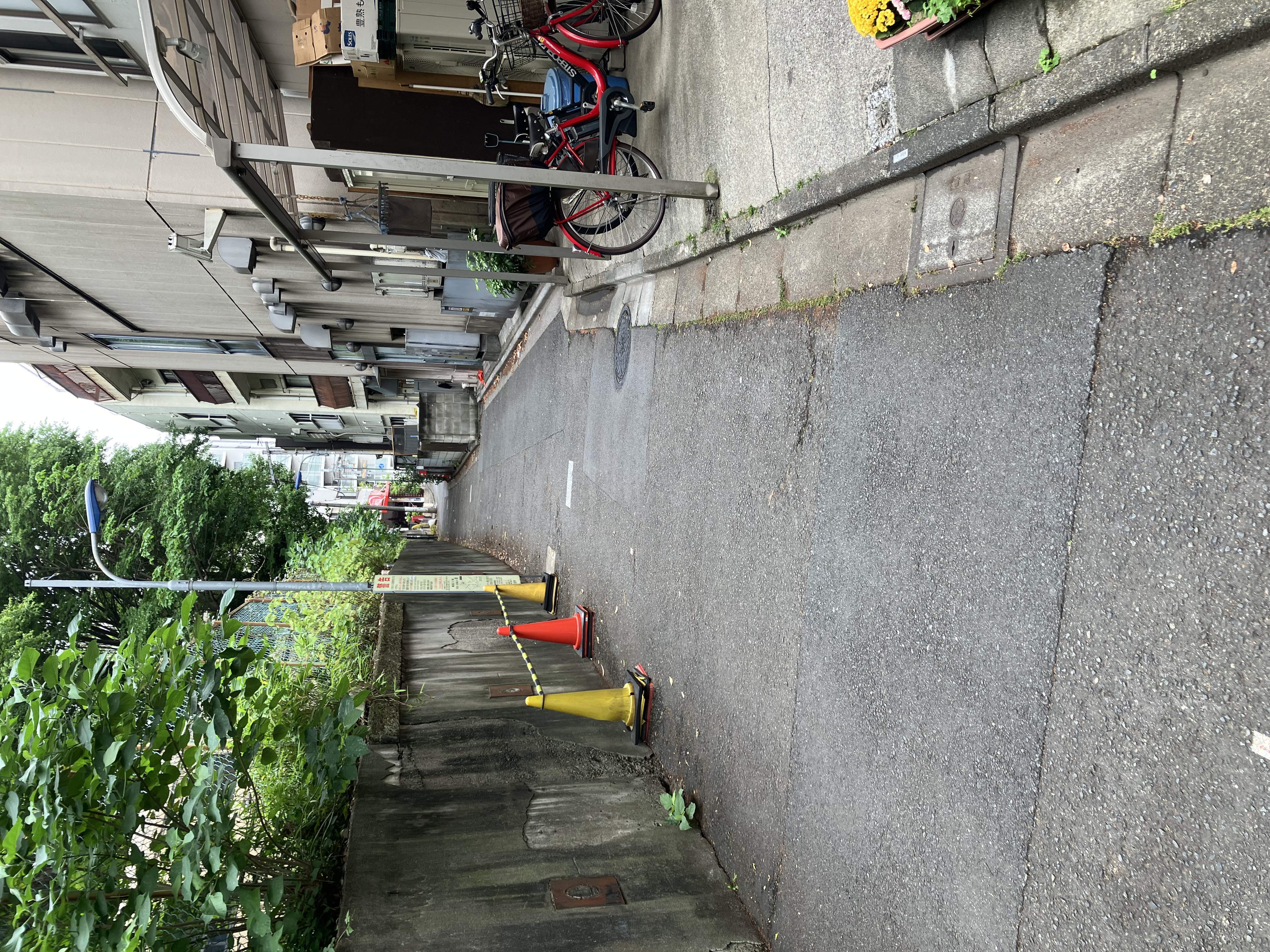
  6. Route photo 6: Walk straight ahead along the lane.

    Walk straight ahead along the lane.

  7. Route photo 7: Continue straight to the entrance.

    Continue straight to the entrance.

  8. Route photo 8: Look for the entrance marked “2B”.

    Look for the entrance marked “2B”.

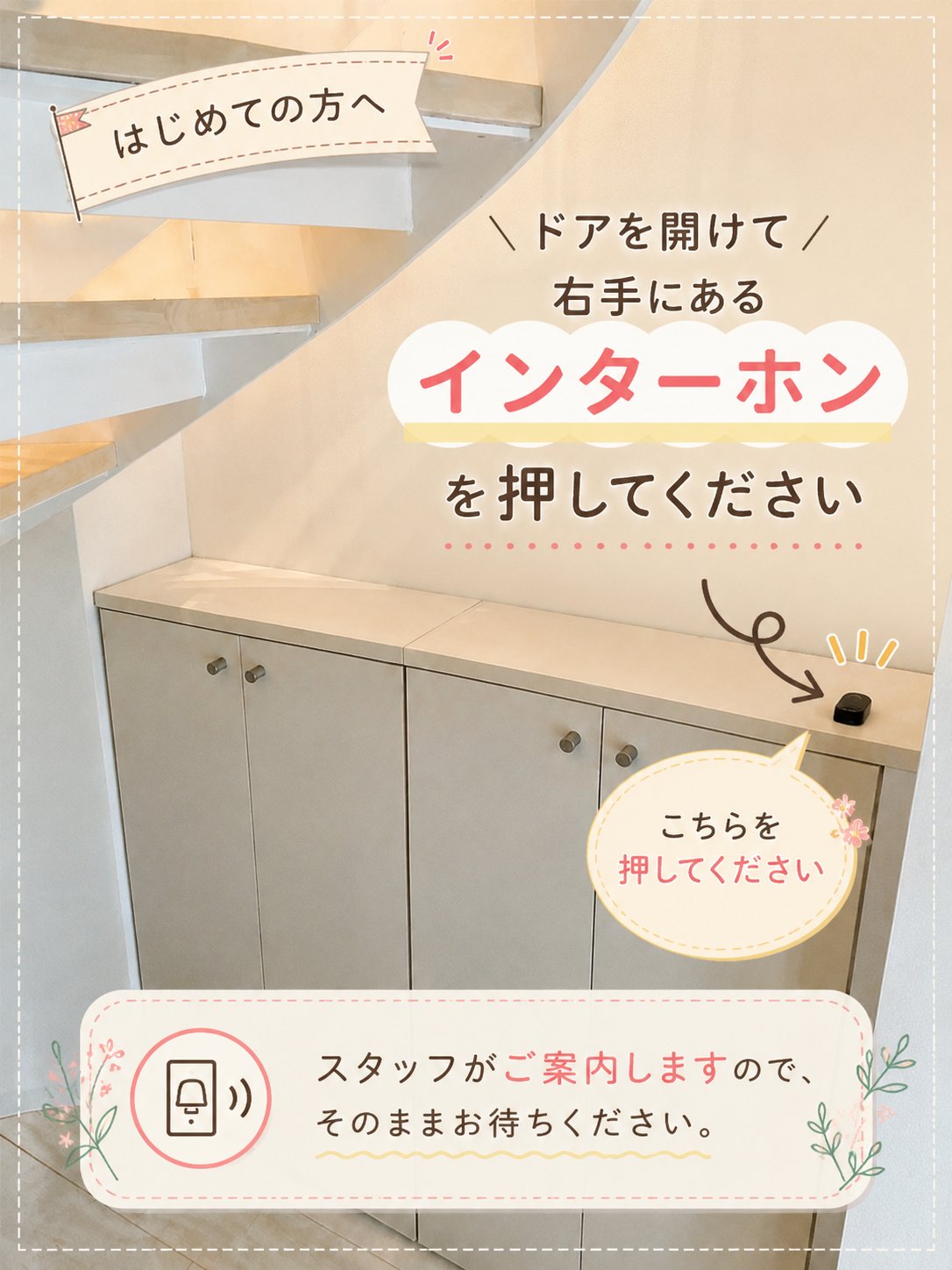
  9. Route photo 9: Open the entrance door. Press the intercom above the shoe cabinet on your right; the practitioner will come to guide you.

    Open the entrance door. Press the intercom above the shoe cabinet on your right; the practitioner will come to guide you.

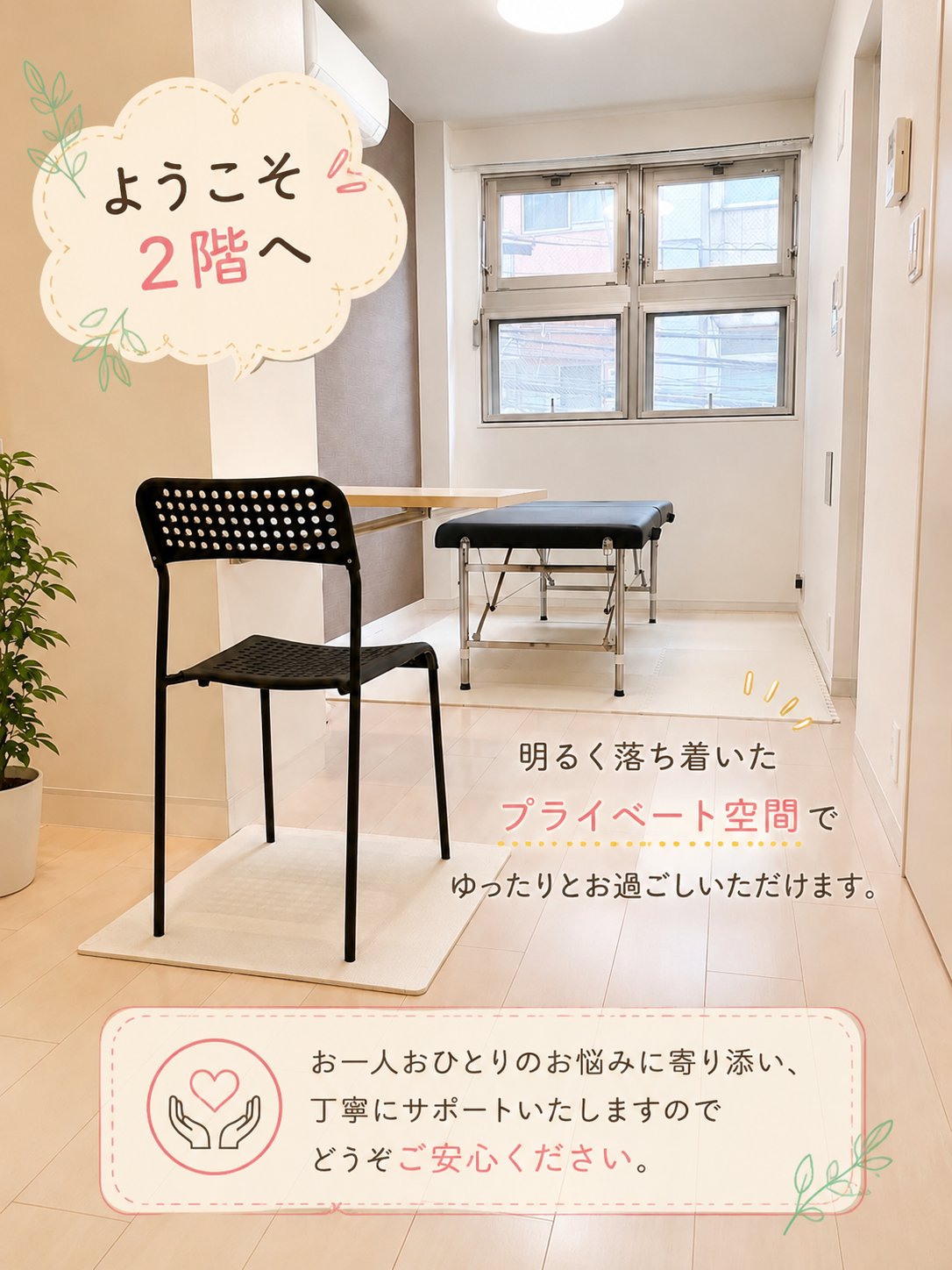
  10. Route photo 10: Go upstairs to the second floor and take a seat.

    Go upstairs to the second floor and take a seat.

BEFORE YOUR VISIT

A few practical questions.

What should I wear?

Your everyday clothes are fine. Trousers are available to change into if you arrive wearing a skirt.

Can I come just once?

Yes. A single visit during your trip is welcome. We use the available time to assess, treat and check your response. Results vary, and one visit is not a promise of complete relief.

Can we communicate in English?

Yes. During your visit, we use smartphone translation for questions and explanations, and we check the movements that cause pain and any changes you feel during the session. You do not need to speak Japanese or explain everything in perfect English. English support is not available by phone, so please contact us by WhatsApp or email.

Can I take photos or videos and post them on social media?

Absolutely. Photos and videos during your visit are very welcome, and you are welcome to share them on Instagram, TikTok, YouTube or other social media. If you would like to record part of the assessment or treatment, just let me know.

Why is the traveler rate different from the regular domestic price?

The traveler appointment is a longer 60-minute visit intended for people who may only be able to come once during their stay in Japan. The price is based on the type of visit, not nationality. If you live in Japan, our regular domestic price of ¥3,300 for 30 minutes applies regardless of nationality.

How can I pay?

Currently, we accept cash in Japanese yen only. The 60-minute appointment is ¥9,900, tax included.

How do I book?

Message us on WhatsApp with your name, preferred dates and times in Japan time, and a brief description of your symptoms. Email is also available. Sending a message does not confirm a booking; your appointment is confirmed by our reply.

BEFORE YOU TRAVEL, OR WHILE YOU ARE HERE

Tell us what has been troubling you.

You do not need to decide on a visit before asking a question. Tell us when it hurts and what you would like us to look at.

Please include your name, preferred date and time in Japan Standard Time (JST, UTC+9), and a brief description of your symptoms.

Sending your request does not confirm an appointment. Your booking is confirmed only when we reply to confirm it.

Phone: +81 70-6441-3907
English support is not available by phone. If you need to communicate in English, please use WhatsApp or email.